

Dog grooming is an essential part of responsible pet ownership. Regular grooming helps keep your dog’s coat clean, skin healthy, nails comfortable, and teeth free from excessive plaque. It also gives you an opportunity to notice changes such as skin irritation, unusual lumps, ear discharge, or other potential health concerns.
Many dog owners take their pets to professional groomers, but you can perform several basic grooming tasks at home with the right equipment, patience, and a gentle approach.
Learning how to groom your dog at home can also help your pet become more comfortable with handling and routine care.
If you are wondering what are the 7 steps of grooming a dog?, this guide explains each step, the equipment you need, common grooming mistakes to avoid, and practical tips for making the experience safe and stress-free.
What Are the 7 Steps of Grooming a Dog? What Is the Grooming Process for Dogs?
Whether you have a puppy, a short-haired dog, or a long-haired breed, these dog grooming guidelines will help you establish a routine that suits your pet’s needs.
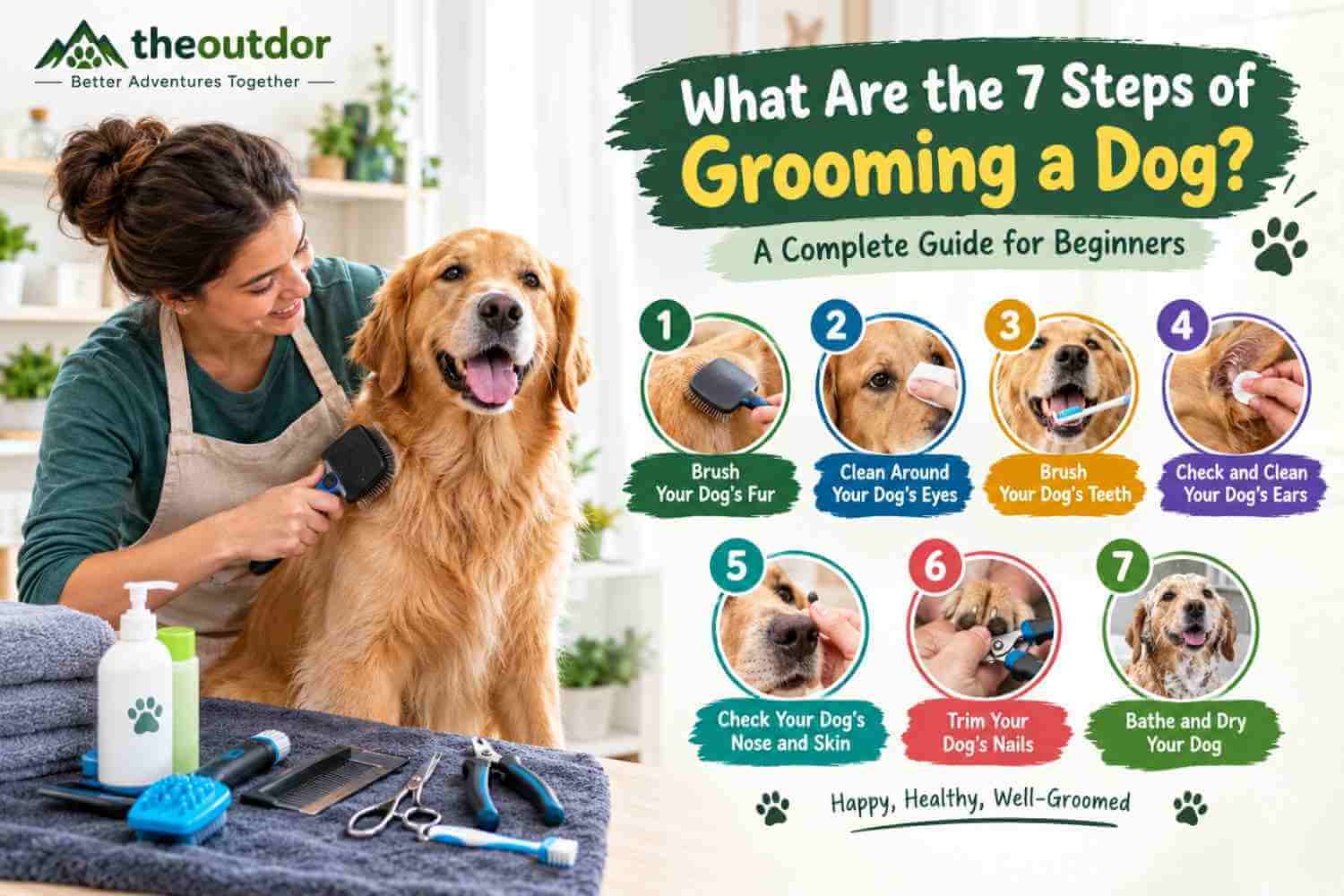
Dog grooming is the process of maintaining a dog’s coat, skin, nails, ears, eyes, and oral hygiene. Depending on the breed and coat type, grooming may include brushing, bathing, drying, trimming, and removing loose or tangled hair.
The grooming requirements for dogs vary considerably. A short-haired Labrador may need regular brushing and occasional baths, while a long-haired Yorkshire Terrier may require frequent brushing and professional coat maintenance.
Grooming is not simply about making your dog look attractive. It also helps you identify potential problems early, prevents painful mats in susceptible coats, and keeps your dog comfortable.
What Does Grooming Do for a Dog?
Regular grooming can provide several benefits:
- Maintains a healthy coat: Brushing removes loose hair, dirt, and some debris.
- Helps prevent matting: Frequent brushing reduces tangles in long and curly coats.
- Supports skin health: Grooming helps you notice redness, parasites, wounds, or unusual skin changes.
- Improves nail comfort: Appropriate nail trimming helps prevent overgrown nails from affecting movement.
- Supports oral hygiene: Regular toothbrushing helps control plaque accumulation.
- Keeps your dog comfortable: Cleaning and coat maintenance can reduce irritation caused by dirt and tangles.
- Strengthens trust: Gentle, reward-based grooming helps your dog become more comfortable with handling.
Grooming cannot prevent every health problem, but it is an important part of routine care. And how to take care of your dogs.
Essential Dog Grooming Equipment
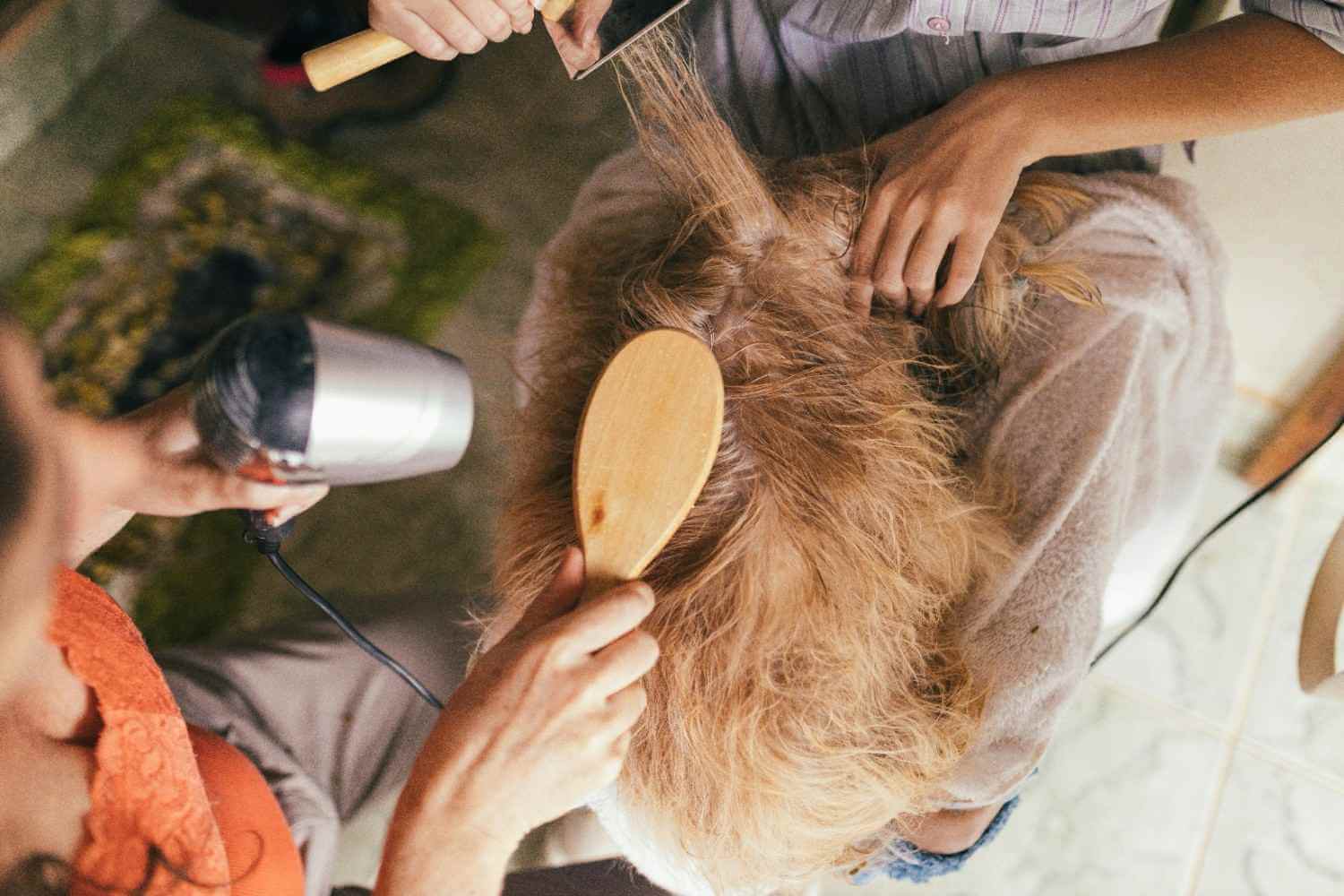
Before you begin, gather the equipment you need. Using suitable tools makes grooming easier and reduces the risk of discomfort or injury.
| Equipment | Purpose |
|---|---|
| Dog brush | Removes loose hair and helps prevent tangles |
| Dog comb | Checks for knots and separates coat sections |
| Dog shampoo | Cleans the coat without using unsuitable human products |
| Towels | Absorb water after bathing |
| Dog toothbrush and toothpaste | Support daily oral hygiene |
| Dog nail clippers or grinder | Shorten overgrown nails carefully |
| Dog-safe ear cleaner | Cleans the ears when needed |
| Soft, damp cloth | Wipes around the eyes and muzzle |
| Dog grooming scissors | Trims suitable areas when used safely |
| Pet-safe dryer | Helps dry the coat when appropriate |
| Non-slip mat | Improves stability during grooming |
| Treats | Reward calm behavior and cooperation |
Choose brushes according to your dog’s coat type. Slicker brushes can be useful for many long or curly coats, while rubber grooming brushes often work well for short-haired dogs.
If you plan to use clippers, select equipment designed for pets and learn how to operate it safely. Keep sharp tools away from your dog’s eyes, ears, skin folds, and other sensitive areas.
How to Prepare Your Dog for Grooming at Home
Preparation is an important part of the grooming process. A calm environment and appropriate equipment can make the experience more comfortable for both you and your dog.
1. Choose a Comfortable Grooming Area
Select a quiet place with good lighting and enough room to move around your dog. A bathroom, utility room, or another easy-to-clean area can work well.
Use a non-slip mat on the floor or bathing surface. Slippery surfaces can make dogs nervous and increase the risk of falls.
Avoid leaving your dog unattended on an elevated grooming table, in a bathtub, or near an open water source. All of this could be a training area you choose.
2. Introduce Grooming Tools Gradually
If your dog is unfamiliar with grooming equipment, allow them to investigate the tools before you begin. Let your dog see and smell the brush, comb, and nail clippers.
Touch your dog’s body gently with the brush and offer a small treat. Repeat the process for short periods until your pet becomes comfortable.
Puppies especially benefit from early, positive introductions to brushing, paw handling, toothbrushing, and bathing.
3. Check Your Dog’s Coat and Skin
Before grooming, look for mats, wounds, redness, swelling, parasites, or sensitive areas. Do not pull forcefully on tangled hair.
Severe mats may require professional removal because they can trap moisture and pull painfully on the skin. If you notice an unusual lump, persistent itching, or a painful area, consult your veterinarian.
What Are the 7 Steps of Grooming a Dog?
The following seven steps provide a practical starting point for a basic at-home grooming routine. The exact order may change depending on your dog’s coat, condition, temperament, and grooming needs.
Step 1: Brush Your Dog’s Fur
Brushing is one of the most important parts of dog grooming. It removes loose hair, helps distribute natural oils through the coat, and allows you to identify tangles before bathing.
How to Brush Your Dog Properly
- Choose a brush suitable for your dog’s coat.
- Begin with an easy-to-reach area, such as the back or shoulders.
- Brush gently in small sections, following the direction of hair growth when appropriate.
- Pay attention to areas behind the ears, under the collar, around the legs, and beneath the tail.
- Use a comb to check whether the hair is free from tangles.
- Reward your dog for remaining calm.
For long-haired dogs, work through the coat in small sections rather than brushing only the surface. This helps you identify tangles closer to the skin.
Never yank a brush through a tight mat. Pulling can hurt your dog and make future grooming more difficult. If the mat is close to the skin or cannot be removed easily, ask a professional groomer for help.
How Often Should You Brush Your Dog?
The ideal frequency depends on coat type.
- Short-haired dogs: Often benefit from brushing once or twice a week.
- Medium-haired dogs: May need brushing several times a week.
- Long-haired dogs: Frequently require daily brushing to prevent tangles.
- Curly-coated dogs: Often need regular brushing and combing to prevent mats.
These are general guidelines. Your dog’s coat, shedding pattern, and lifestyle determine the most suitable schedule.
Step 2: Clean Around Your Dog’s Eyes
Your dog’s eyes are sensitive, so cleaning around them requires a gentle touch.
Some dogs develop small amounts of dried discharge near the corners of their eyes. You can usually remove this material with a clean, soft cloth dampened with lukewarm water.
How to Clean Your Dog’s Eyes
- Wash your hands before starting.
- Dampen a clean, soft cloth with lukewarm water.
- Gently wipe away discharge from the surrounding fur.
- Use a separate clean section of cloth for the other eye.
- Avoid pressing on the eyeball or rubbing the eyelids forcefully.
Do not put ordinary soap, shampoo, or unapproved cleaning solutions into your dog’s eyes. Avoid using cotton swabs near the eyeball.
Check for persistent tearing, redness, swelling, squinting, cloudiness, or unusual discharge. These signs may indicate an eye problem and warrant veterinary advice. Sudden eye pain or an eye injury needs prompt veterinary attention.
Important: A dog’s nose or eyes do not need to be kept artificially moist as part of routine grooming. Avoid applying eye drops unless your veterinarian recommends them.
Step 3: Brush Your Dog’s Teeth
Dental care is often overlooked during dog grooming, but it is an important part of your pet’s overall health routine.
Plaque accumulates on teeth and can contribute to tartar buildup, gum inflammation, bad breath, and periodontal disease. Regular brushing helps control plaque before it hardens.
How to Brush Your Dog’s Teeth
- Choose a toothbrush designed for dogs or a suitable soft-bristled pet toothbrush.
- Use toothpaste specifically formulated for dogs.
- Introduce the toothbrush gradually so your dog gets used to the taste and feel.
- Gently lift the lip to expose the outer surfaces of the teeth.
- Brush using small, gentle movements along the gumline.
- Focus on the outside surfaces, where plaque commonly accumulates.
- Praise your dog and reward cooperation.
Daily brushing is ideal when your dog tolerates it. If daily brushing is not initially possible, start with short sessions and build up gradually.
Never use human toothpaste, as some products contain ingredients such as xylitol that can be dangerous to dogs.
If your dog has painful gums, loose teeth, bleeding, or significant tartar, arrange a veterinary dental examination instead of forcing the toothbrush into the mouth.
Step 4: Check and Clean Your Dog’s Ears
Ear care is another important part of dog grooming. Some dogs, particularly those with floppy ears or a history of ear problems, may need more frequent monitoring.
However, not every dog needs routine ear cleaning. Cleaning too frequently or using the wrong products can irritate the ear canal.
How to Clean Your Dog’s Ears Safely
- Examine the visible ear and look for redness, swelling, discharge, or an unusual smell.
- Use a veterinary-approved ear-cleaning solution appropriate for dogs.
- Follow the product instructions or your veterinarian’s advice.
- If instructed, apply the solution and gently massage the base of the ear.
- Allow your dog to shake their head.
- Wipe away loosened debris from the visible outer ear using cotton wool or a soft pad.
Never push cotton swabs, fingers, or other objects deep into the ear canal. Do not use ear-cleaning solutions if you suspect an eardrum injury or if your dog has painful or inflamed ears unless a veterinarian has advised you to do so.
Contact your veterinarian if your dog repeatedly shakes their head, scratches their ears, has a foul smell, or develops discharge. These symptoms can indicate infection or another ear condition that requires treatment.
Should You Clean Your Dog’s Ears Every Week?
There is no universal schedule for every dog. Some dogs need occasional cleaning, while others need a routine directed by a veterinarian. Follow your dog’s individual needs rather than cleaning the ears unnecessarily.
Step 5: Check Your Dog’s Nose and Skin
The nose is not usually an area that requires extensive grooming. Instead, check it along with the rest of your dog’s skin and coat.
A healthy dog may have a moist or slightly dry nose at different times of the day. Temporary dryness alone does not necessarily indicate dehydration or illness.
How to Care for Your Dog’s Nose
- Wipe away dirt with a clean, soft, damp cloth.
- Avoid scrubbing the nose or removing normal surface material.
- Provide access to fresh drinking water.
- Use a dog-safe nose balm only when appropriate and follow veterinary advice if the skin is irritated.
If the nose becomes cracked, bleeds, develops sores, or shows persistent changes, consult your veterinarian rather than relying only on a balm.
Check the Rest of the Skin
During grooming, inspect your dog for fleas, ticks, unusual lumps, redness, scabs, and areas of hair loss.
If you find a tick, remove it using an appropriate tick-removal tool and follow veterinary guidance. Seek advice if you are unsure how to remove it safely or if the attachment site becomes inflamed.
Routine inspection helps you recognize changes that might otherwise remain hidden beneath thick fur.
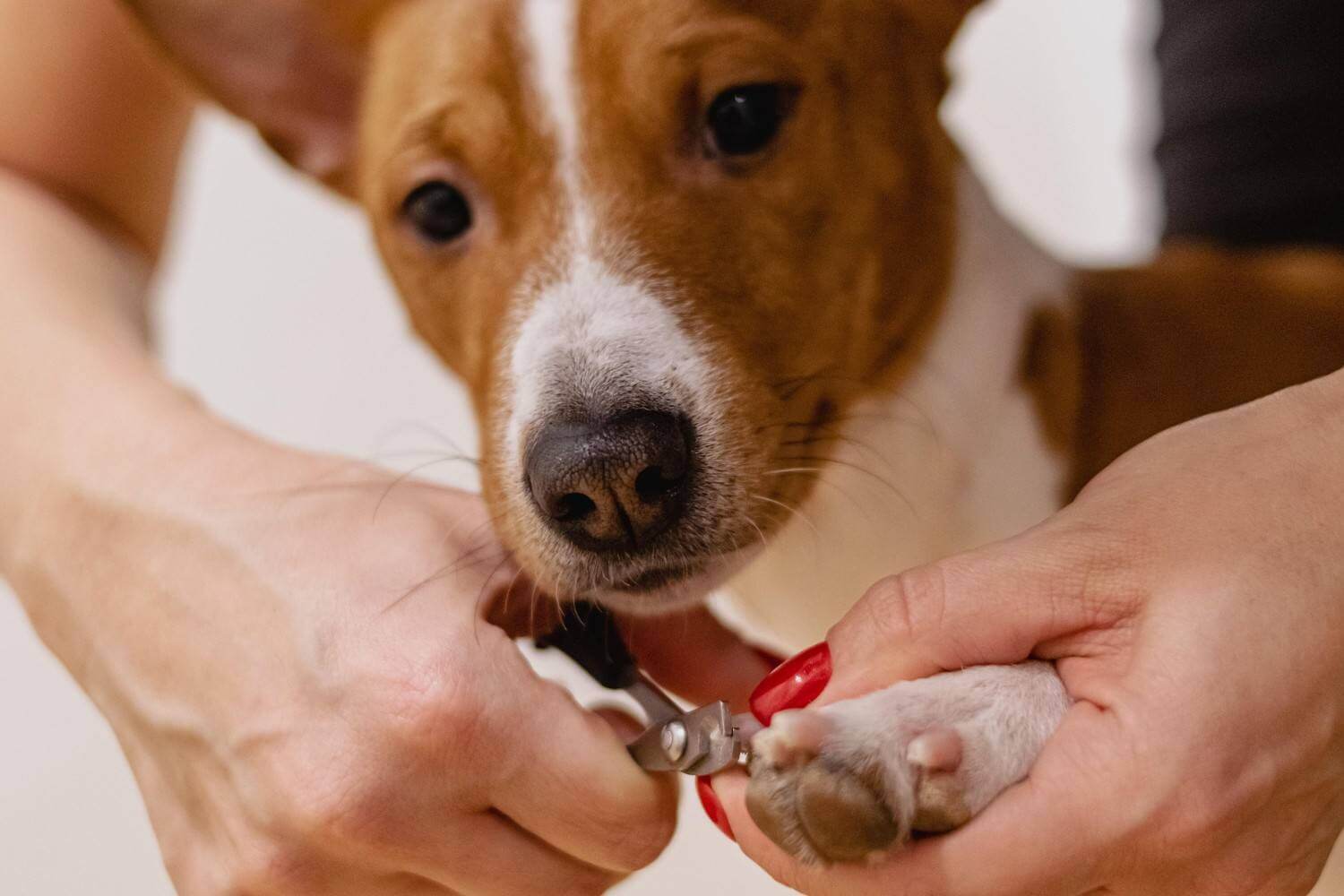
Step 6: Trim Your Dog’s Nails
Nail trimming is essential because excessively long nails can cause discomfort, catch on surfaces, and affect normal movement.
Some dogs naturally wear down their nails through activity on suitable surfaces, but many still need regular trimming.
How to Trim Your Dog’s Nails Safely
- Choose dog-specific nail clippers or a pet nail grinder.
- Let your dog become comfortable with the tool before using it.
- Hold one paw gently without squeezing.
- Identify the quick, the sensitive area containing blood vessels and nerves.
- Trim only a small amount from the nail tip.
- Check the nail after each cut and stop before approaching the quick.
- Reward your dog and take breaks when necessary.
In light-colored nails, the quick is often visible as a pink area. It can be harder to identify in dark nails, so trimming tiny amounts at a time is especially important.
If you accidentally cut the quick, the nail may bleed and hurt. Use a pet-safe styptic product according to its instructions and contact a veterinarian if bleeding does not stop or the injury is significant.
How Do You Know When Your Dog Needs a Nail Trim?
Listen for clicking sounds when your dog walks on hard flooring and check whether the nails extend excessively toward the ground. These can be signs that trimming is needed.
Do not wait until the nails curl into the paw pads. If your dog struggles, growls, panics, or resists strongly, stop and seek help from a qualified groomer or veterinary professional.
Step 7: Bathe and Dry Your Dog
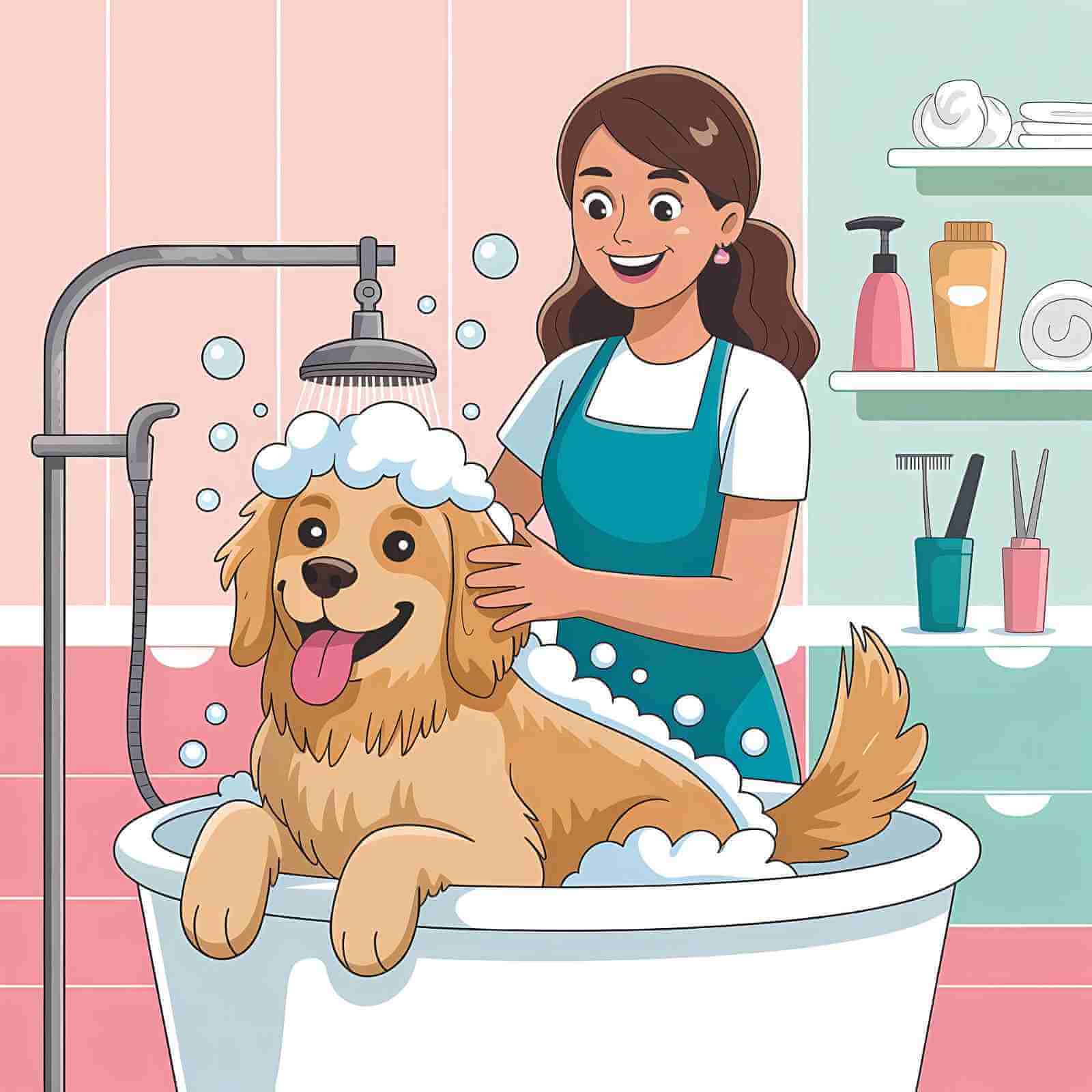
Bathing removes dirt, odors, and some allergens from your dog’s coat. It is often the final major step in a basic grooming session, although the order may vary when clipping or trimming is required.
When Should You Bathe Your Dog?
Bathing frequency depends on coat type, activity, skin condition, and veterinary recommendations. Some dogs need baths every few weeks, while others can go longer between baths. Dogs with specific skin conditions may need a prescribed bathing schedule.
Bathing every week is not necessary for every dog. Excessive bathing or using unsuitable products can dry or irritate the skin.
How to Bathe Your Dog at Home
- Brush the coat before bathing to remove loose hair and manageable tangles.
- Place your dog on a non-slip surface.
- Use lukewarm water rather than hot water.
- Wet the coat carefully, avoiding direct water exposure to the eyes and inside the ears.
- Apply dog shampoo according to the label.
- Massage it gently through the coat without rubbing tangled hair aggressively.
- Rinse thoroughly until no shampoo remains.
- Use a towel to absorb excess water.
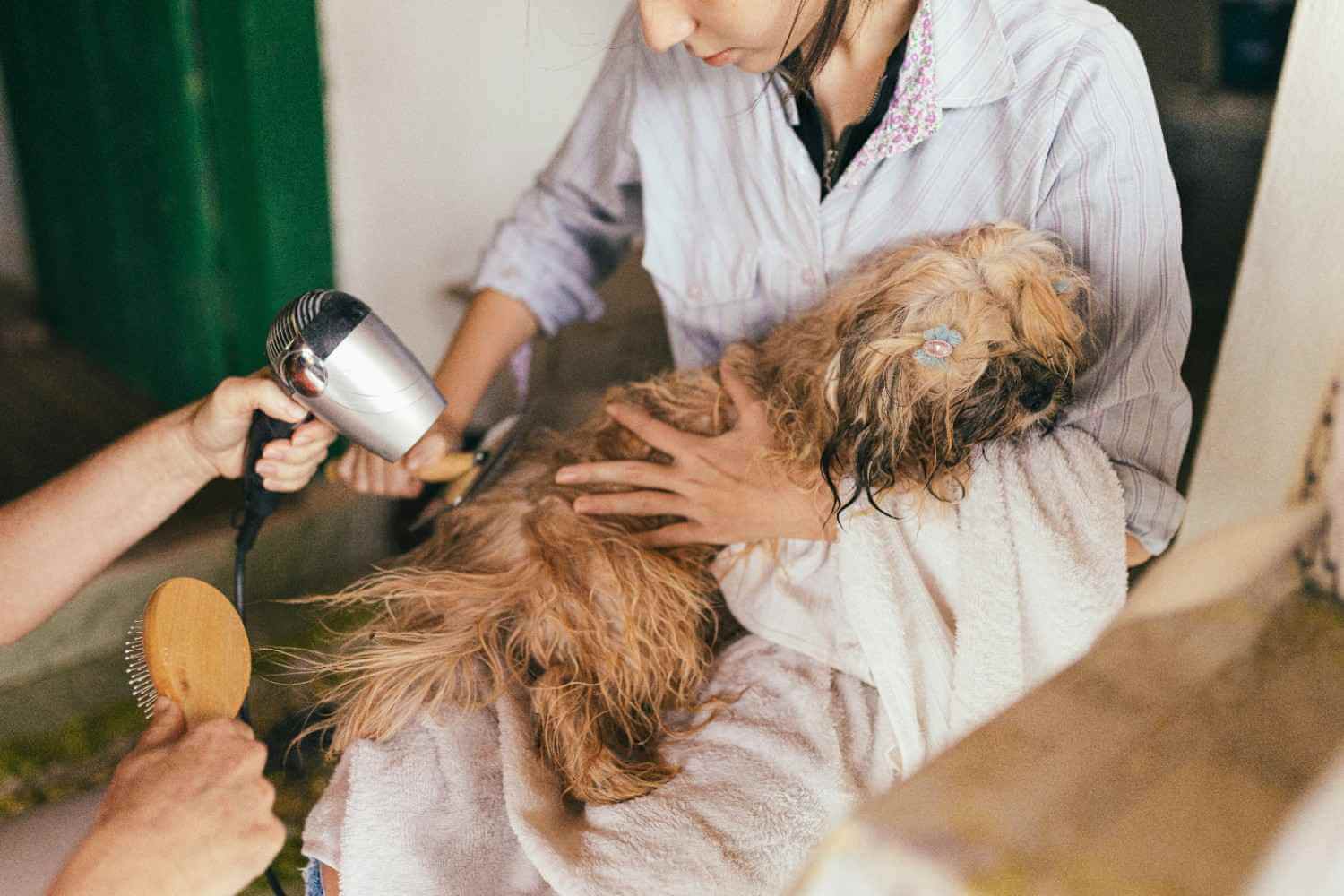
- Dry the coat completely using a safe method suitable for your dog’s coat and temperament.
If you use a pet dryer, choose a low, comfortable heat setting and keep the airflow moving. Never leave a dryer directed at one spot, and stop if your dog becomes distressed or overheated.
For long-haired or double-coated dogs, thorough drying can help prevent moisture from remaining trapped near the skin. Follow your veterinarian’s guidance if your dog has skin disease or requires a medicated shampoo.
Should You Brush Your Dog Before or After a Bath?
Brush your dog before bathing to remove loose hair and tangles. Once the coat is clean, you can brush or comb it again as appropriate while drying, particularly for long or curly coats.
Bathing a severely matted dog can make some tangles tighter and harder to remove. Seek professional help if you cannot safely work through the coat before washing.
Should You Cut or Wash Your Dog First?
There is no single order that applies to every dog and every haircut.
For many coat types, a common professional approach is to brush out tangles, bathe, dry thoroughly, and then perform the final haircut or finishing trim. Clean, fully dried hair is often easier to clip evenly.
However, some professional groomers perform preliminary clipping or coat removal before bathing when the coat is extremely dirty or matted. The correct method depends on the dog’s coat and condition.
For beginners, the safest general routine is:
- Examine and brush the coat.
- Address manageable tangles before bathing.
- Bathe and rinse thoroughly.
- Dry the coat safely.
- Perform only the trimming you can do confidently.
Avoid attempting to cut tight mats out with scissors. Mats can pull skin up into the tangled hair, making it easy to cut the skin accidentally.
How to Groom a Dog With Clippers
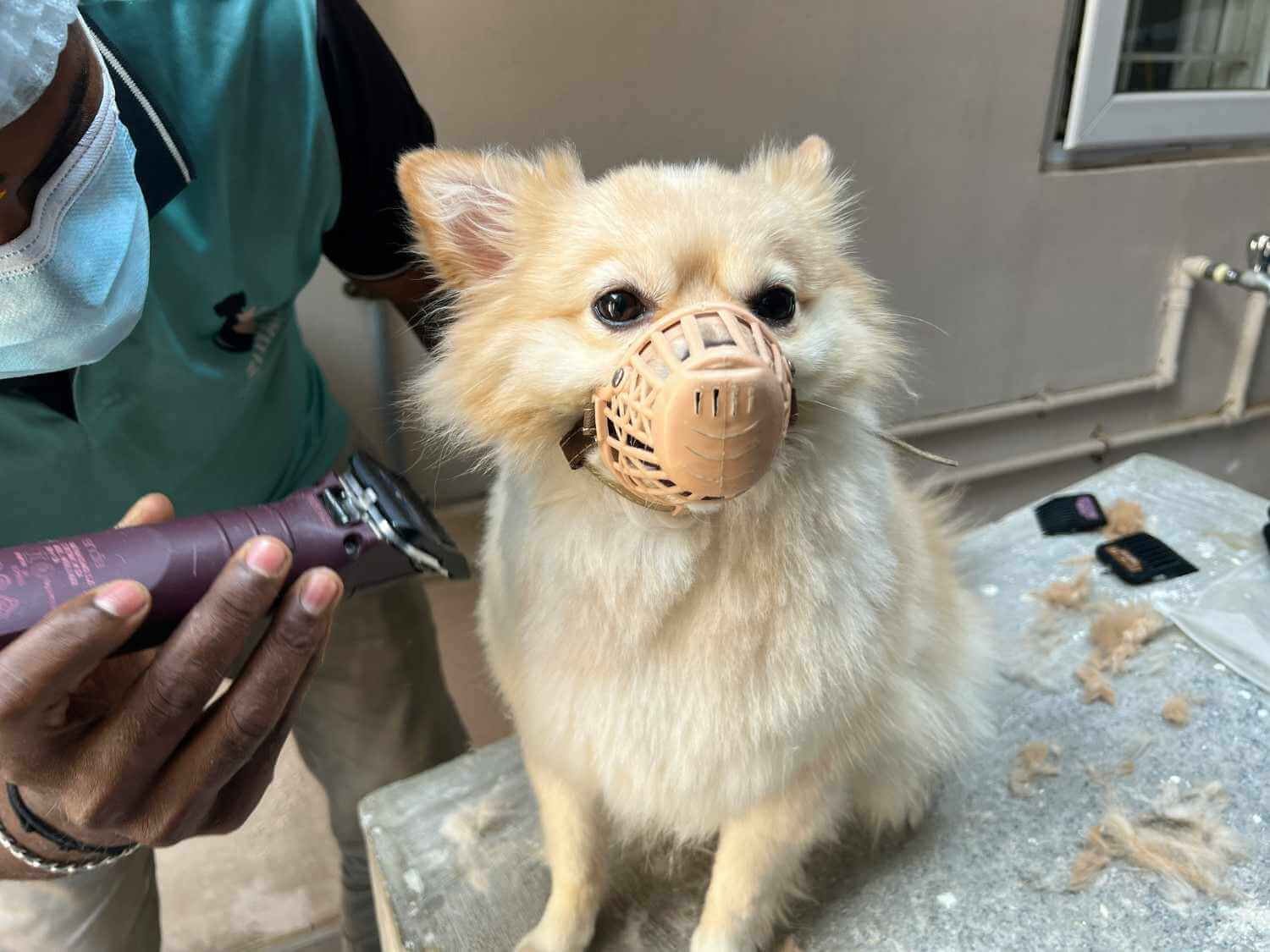
Dog clippers can help maintain certain coat styles, but they require careful handling. Human hair clippers may not be suitable for every dog coat.
Before clipping:
- Select blades or guard attachments appropriate for the coat and desired length.
- Read the clipper manufacturer’s instructions.
- Check the blade temperature regularly.
- Keep the clipper flat and move it gently in the direction recommended for the coat.
- Avoid clipping irritated skin, wounds, or tightly matted areas without professional guidance.
- Take breaks if your dog becomes uncomfortable.
Be especially cautious around the face, ears, armpits, groin, and other areas where skin is thin or folds are present.
Do not assume that shaving a double-coated dog is harmless. Removing the coat may interfere with its natural insulating and protective functions. Ask a professional groomer or veterinarian before making major changes to a double-coated breed’s coat.
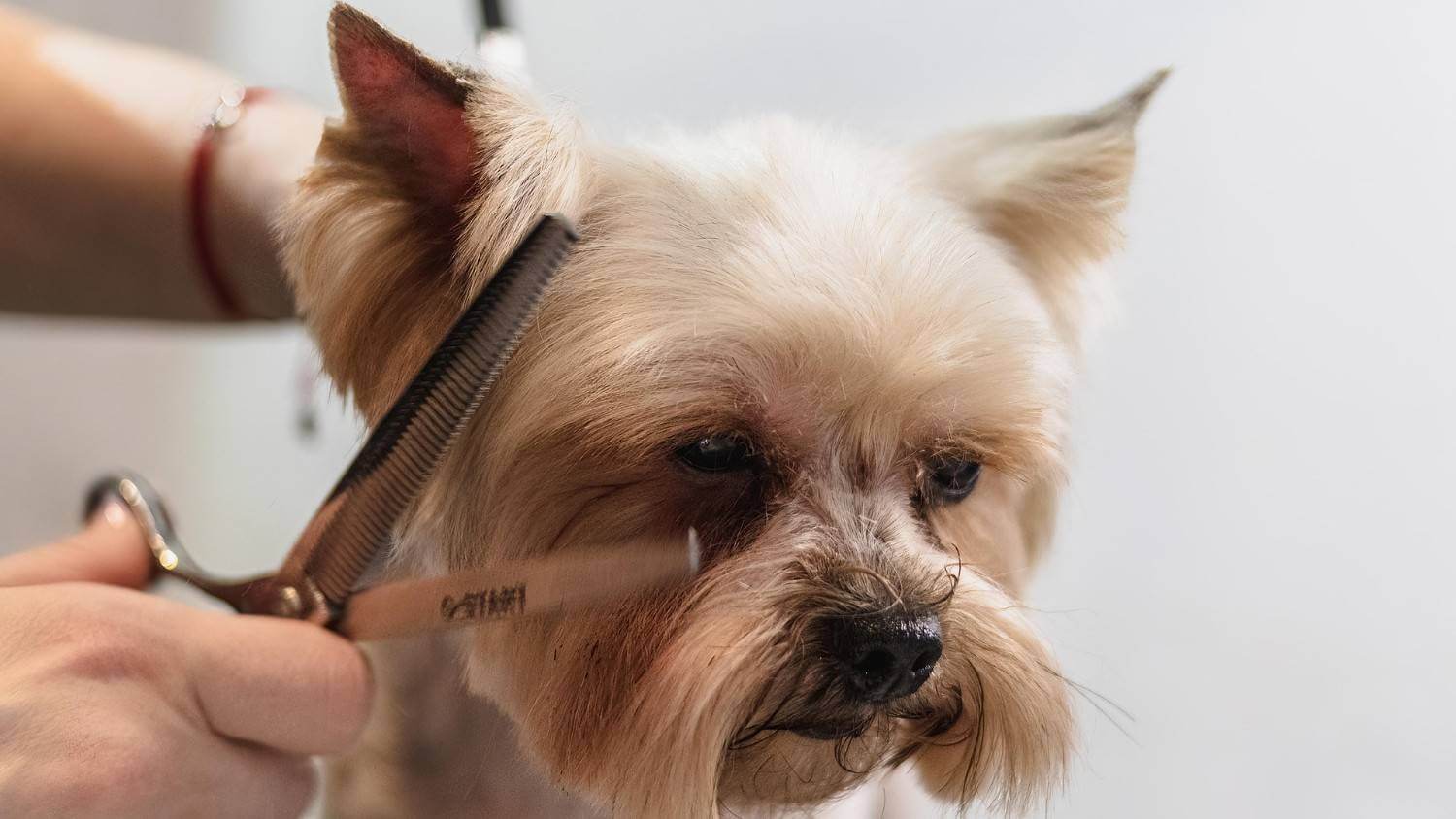
How to Use Dog Grooming Scissors Safely
Dog grooming scissors are useful for finishing certain areas, but they can cause serious injuries if your dog moves suddenly.
Keep the blades away from the skin and never cut blindly into a mat. Use rounded-tip grooming scissors only where appropriate, and avoid working close to the eyes, ear canals, lips, and other sensitive structures.
If your dog moves frequently or becomes anxious, stop rather than trying to finish quickly. A professional groomer can safely handle difficult trims.
How to Secure Your Dog for Grooming
Many owners search for how to secure your dog for grooming because their pets move around or become nervous during handling.
The safest approach is to use gentle restraint and positive reinforcement rather than force.
- Groom your dog on a stable, non-slip surface.
- Keep grooming sessions short at first.
- Offer treats and praise for calm behavior.
- Support the body gently when handling paws or legs.
- Allow breaks when your dog shows signs of stress.
- Never leave a dog unattended on a grooming table or in a bath.
- Avoid tying or restraining your dog in a way that could tighten around the neck or cause choking.
If your dog repeatedly snaps, panics, struggles intensely, or appears painful, stop the session. A veterinarian can check for underlying discomfort and recommend appropriate behavior support or professional grooming options.
Common Dog Grooming Mistakes to Avoid
Even well-intentioned owners can make mistakes when learning dog grooming methods. Avoiding these common problems helps protect your pet.
1. Using human shampoo: Human products may be unsuitable for a dog’s skin. Choose a dog-specific shampoo.
2. Brushing aggressively: Pulling through mats can hurt your dog and damage the coat.
3. Cutting mats with scissors: The skin can be trapped inside the mat, increasing the risk of cuts.
4. Cleaning ears too deeply: Inserting cotton swabs or other objects into the ear canal can cause injury.
5. Trimming nails too short: Cutting into the quick causes pain and bleeding.
6. Using excessive heat when drying: Hot air can burn the skin or cause overheating.
7. Forcing an anxious dog to continue: Stressful experiences can make future grooming more difficult.
8. Ignoring warning signs: Persistent itching, painful skin, eye discharge, or ear odor may need veterinary attention.
9. Following the same schedule for every breed: Different coat types and skin conditions require different grooming routines.
10. Attempting difficult procedures without training: Intricate haircuts, severe mat removal, and grooming around painful areas may require professional assistance.
How Often Should You Groom Your Dog?
A grooming schedule should be based on your dog’s individual needs rather than a fixed rule for all breeds.
| Grooming task | General frequency |
|---|---|
| Brushing | Weekly to daily, depending on coat type |
| Bathing | As needed, based on coat, activity, and skin condition |
| Toothbrushing | Ideally daily |
| Ear checks | Regularly; cleaning only when needed |
| Nail trimming | As needed, often every few weeks |
| Eye-area cleaning | As needed if discharge accumulates |
| Professional grooming | Based on coat type and maintenance needs |
These are starting points, not strict rules. Dogs with curly, long, or rapidly growing coats may require more frequent maintenance. Dogs with allergies or skin conditions may need a veterinarian-recommended routine.
When Should You Visit a Professional Dog Groomer?
Home grooming is suitable for many routine tasks, but professional help is valuable when the work becomes difficult or unsafe.
Consider a professional groomer if your dog has severe mats, a complicated haircut, a thick coat that requires specialist equipment, or significant fear of grooming tools.
A veterinarian should assess painful skin conditions, infected ears, eye problems, unusual lumps, and other medical concerns. Groomers can help with coat maintenance, but they are not a substitute for veterinary diagnosis or treatment.
If you want to become more confident with dog grooming, you can also learn from professional demonstrations and training resources before attempting unfamiliar techniques.
Useful starting resources include: How to Groom a Dog – wikiHow and How to Become a Dog Groomer
Use demonstrations as supplementary learning materials, and follow veterinary guidance when a procedure involves health risks.
Frequently Asked Questions About Dog Grooming
1. How do you groom a dog step by step?
Start by preparing a comfortable grooming area and checking your dog’s skin and coat. Brush out loose hair and manageable tangles, clean around the eyes if needed, brush the teeth, check the ears and nose, trim the nails carefully, and bathe and dry the dog as appropriate.
The order may vary depending on coat type and grooming needs.
2. What order should you groom a dog?
For a typical at-home grooming session, begin with a coat inspection and brushing. Next, complete suitable hygiene tasks, such as toothbrushing and checking the ears and eyes.
Trim the nails if needed, then bathe and dry the dog. Perform any necessary finishing trim only if you have the appropriate skills and equipment.
Some tasks can be completed on separate days. You do not need to perform every grooming task in one session.
3. When grooming a dog, do you wash or cut first?
Brush the coat first and remove manageable tangles before bathing. For many haircuts, the dog is then bathed and dried completely before the final clipping.
Preliminary clipping may be appropriate in certain circumstances, but severely matted coats should be handled by an experienced professional.
4. When grooming a dog, what do you do first?
Begin by choosing a quiet, safe location and gathering the required equipment. Let your dog settle, check the coat and skin, and introduce the tools gently. Brushing is usually the first hands-on grooming step.
5. What are the basics of dog grooming?
The basics include brushing, bathing when necessary, drying, toothbrushing, nail maintenance, and checking the eyes, ears, skin, and paws. Hair trimming may also be needed for some breeds.
Each task should be performed with suitable equipment and a gentle approach.
6. What does a dog groom include?
A basic grooming session may include brushing, bathing, drying, nail trimming, ear inspection, and coat trimming where appropriate. Some groomers also provide toothbrushing, paw-pad trimming, sanitary trimming, and other services.
The exact package varies by provider, breed, and the dog’s needs.
7. What are the grooming requirements for dogs?
Grooming requirements depend on coat type, breed, activity level, age, and skin condition. All dogs need appropriate hygiene and regular checks, but not all dogs require frequent bathing, ear cleaning, or haircuts. Establish a routine that fits your individual dog.
8. Can I groom my dog at home without professional experience?
Yes. Many owners can learn basic brushing, bathing, drying, toothbrushing, and simple nail care. Start with easy tasks, use dog-specific equipment, and introduce each activity gradually. Leave complicated haircuts and severe mat removal to qualified professionals.
9. How do I keep my dog calm during grooming?
Use short sessions, gentle handling, praise, and treats. Allow your dog to become familiar with each tool before using it. Stop if your dog shows strong signs of distress, and seek professional advice if grooming remains difficult.
10. Is grooming necessary for short-haired dogs?
Yes. Short-haired dogs still benefit from brushing, nail maintenance, dental care, and regular checks of their skin, ears, eyes, and paws. They may need less coat maintenance than long-haired breeds, but they still require routine care.
Final Thoughts
Learning what are the 7 steps of grooming a dog can help you build a practical routine for keeping your pet clean, comfortable, and well cared for.
Start by brushing the coat, cleaning around the eyes when necessary, brushing the teeth, checking the ears and nose, trimming the nails carefully, and bathing and drying the dog when appropriate. Adjust the order and frequency according to your dog’s coat, temperament, and health needs.
You do not need to complete every task in a single session. Short, positive grooming sessions can help your dog become more comfortable over time.
Most importantly, use suitable equipment, avoid forceful handling, and recognize when a task requires professional help. If you are unsure about a medical concern or a grooming procedure that could injure your dog, consult a veterinarian or qualified groomer.
With patience, consistency, and the right dog grooming guidelines, you can make grooming a safer and more enjoyable part of your dog’s everyday care.
At TheOutdor, our goal is to help dog owners enjoy healthier, safer, and more comfortable adventures with their dogs.