

Are you looking for ways to improve your dog’s digestion with homemade food? Learning how to make high fiber dog food can help you add more dietary fiber to your dog’s meals using familiar ingredients such as pumpkin, carrots, sweet potatoes, green beans, and whole grains.
Fiber is an important part of a dog’s diet. It supports normal bowel movements, helps regulate stool consistency, and provides nourishment for beneficial bacteria in the digestive tract. It can also help some dogs feel satisfied after eating.
However, not every dog needs the same amount or type of fiber. Too much fiber can interfere with nutrient absorption or cause digestive discomfort. Therefore, choosing suitable ingredients and introducing them gradually is important.
In this guide, you’ll discover the best foods with fiber for dogs, an easy homemade high-fiber dog food recipe, natural fiber food toppers, and practical feeding tips.
Why Is Fiber Important for Dogs?
Dietary fiber is a type of carbohydrate that the digestive system does not completely break down. Instead, different types of fiber affect the digestive tract in different ways.
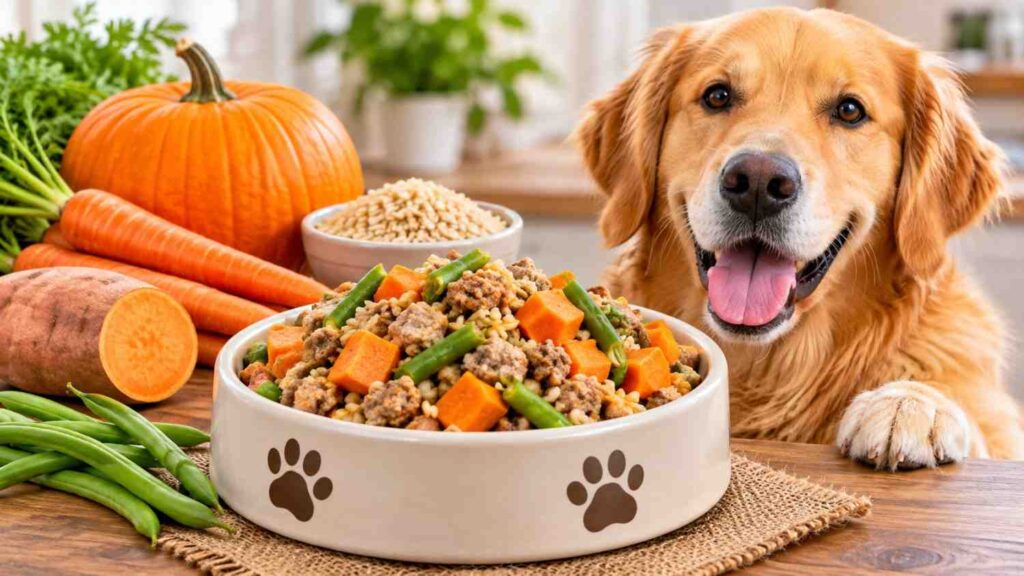
There are two main categories of dietary fiber:
1. Soluble fiber
Soluble fiber absorbs water and can form a gel-like substance during digestion. It may help regulate stool consistency and support beneficial intestinal bacteria.
Examples include:
- Pumpkin
- Oats
- Psyllium
- Certain fruits and vegetables
2. Insoluble fiber
Insoluble fiber adds bulk to stool and can help support normal movement through the digestive tract.
Examples include:
- Carrots
- Green beans
- Wheat bran
- Certain whole grains
Both types can have useful roles in canine nutrition. However, their effects depend on the amount, source, and individual dog’s digestive health.
According to the Merck Veterinary Manual, dietary fiber can influence intestinal transit, stool production, and the activity of beneficial gut bacteria. Excessive fiber, however, can reduce the digestibility of certain nutrients.
Best Foods With Fiber for Dogs
Before preparing a homemade high-fiber dog food recipe, you should understand which ingredients can provide dietary fiber.
Here are some commonly used options.
1. Pumpkin
Pumpkin is one of the most popular fiber-rich ingredients used in homemade dog food. Plain pumpkin contains soluble and insoluble fiber.
It can help support normal bowel movements and is commonly used in small quantities as a food topper.
How to serve:
- Use cooked, plain pumpkin.
- Remove the seeds and skin when preparing fresh pumpkin.
- Alternatively, choose canned pumpkin containing 100% pumpkin.
- Mix a small amount into your dog’s regular food.
Avoid pumpkin pie filling because it may contain added sugar, spices, or other unsuitable ingredients.
2. Sweet Potatoes
Sweet potatoes provide dietary fiber and carbohydrates. They are also a useful source of nutrients, including beta-carotene.
How to serve:
- Wash and peel the sweet potato.
- Cut it into small pieces.
- Boil or steam until completely soft.
- Mash before mixing with your dog’s food.
Never add butter, sugar, salt, or seasoning.
3. Carrots
Carrots are an affordable and convenient source of fiber for dogs. They also contain beta-carotene and can be served as part of a balanced diet.
How to serve:
- Wash and peel the carrots.
- Steam or boil until soft.
- Chop or mash into small pieces.
- Mix with your dog’s regular food.
Avoid large, hard pieces that could create a choking risk.
4. Green Beans
Green beans are another useful vegetable for adding fiber without contributing many calories. They contain fiber and several vitamins and minerals.
How to serve:
- Wash fresh green beans.
- Steam until tender.
- Chop into small pieces.
- Serve plain without salt, garlic, butter, or seasoning.
Plain frozen or no-salt canned green beans can also be convenient options.
5. Oatmeal
Plain oatmeal can provide soluble fiber and carbohydrates. It may be a suitable ingredient for some dogs, particularly when prepared without unnecessary additives.
How to serve:
- Cook plain oats thoroughly in water.
- Allow them to cool.
- Mix a small quantity with your dog’s regular food.
Avoid flavored instant oatmeal containing sugar, artificial sweeteners, or added flavorings.
6. Brown Rice
Brown rice contains more fiber than white rice because it retains its outer bran layer. It also provides carbohydrates that can contribute energy to homemade dog food.
How to serve:
- Rinse the rice.
- Cook thoroughly in water.
- Allow it to cool.
- Mix with other suitable ingredients.
Remember that brown rice is not appropriate for every dog, particularly those with specific digestive or medical dietary requirements.
7. Lentils
Cooked lentils contain dietary fiber and plant-based protein. However, introducing large quantities can cause gas or digestive discomfort in some dogs.
How to serve:
- Rinse the lentils.
- Cook thoroughly in plain water.
- Avoid salt, onions, garlic, and spices.
- Introduce only a small amount if your veterinarian agrees.
Lentils should not replace a properly balanced animal-protein source in your dog’s diet.
How to Make High Fiber Dog Food: Homemade Recipe
Now that you understand the common fiber sources, let’s look at a simple homemade recipe.
This recipe uses turkey, brown rice, sweet potato, carrots, and pumpkin to create a fiber-containing food mixture.
Note: This is an occasional food topper or supplemental recipe, not a complete and balanced daily dog diet. It has not been formulated or tested by a veterinary nutritionist. Do not use it as your dog’s only food.
Recipe 1: Homemade Turkey and Vegetable High Fiber Dog Food
Ingredients:
- 1 pound lean ground turkey
- 2 cups cooked brown rice
- 1 medium sweet potato
- 2 medium carrots
- ½ cup plain pumpkin puree
- 1 cup water, as needed for cooking
Preparation:
Step 1: Prepare the vegetables
Wash the carrots and sweet potato thoroughly. Peel the sweet potato and cut both vegetables into small pieces.
Step 2: Cook the turkey
Place the ground turkey in a cooking pan. Cook thoroughly until there are no raw or pink portions remaining. Do not add oil, butter, salt, or seasoning.
Step 3: Cook the brown rice
Rinse the brown rice and cook it separately in plain water until soft. Allow it to cool.
Step 4: Steam the vegetables
Boil or steam the sweet potato and carrots until they are completely tender. Mash or chop them into small pieces.
Step 5: Combine the ingredients
Place the cooked turkey, brown rice, vegetables, and pumpkin into a large mixing bowl. Mix everything thoroughly until the ingredients are evenly distributed.
Step 6: Cool and serve
Allow the mixture to cool completely before serving. Introduce a small amount alongside your dog’s regular complete food, with your veterinarian’s approval.
Recipe 2: Chicken, Sweet Potato, and Pumpkin Fiber Topper
If your dog enjoys chicken, this is another simple option.
Ingredients:
- 1 cup cooked, skinless chicken
- ½ cup cooked sweet potato
- ¼ cup plain pumpkin puree
- ¼ cup cooked carrots
- A little water, if needed
Preparation:
- Cook the chicken thoroughly without seasoning.
- Remove all bones and skin.
- Boil or steam the sweet potato and carrots until soft.
- Mash the vegetables into a smooth mixture.
- Add the pumpkin and shredded chicken.
- Mix everything thoroughly.
- Allow it to cool before serving.
This recipe provides a combination of animal protein, carbohydrates, and fiber-containing vegetables. It is intended as a supplemental topper, not a nutritionally complete meal.
Recipe 3: Lentil and Vegetable Fiber Topper
Lentils can provide additional dietary fiber, although some dogs may experience gas after eating them.
Ingredients:
- ½ cup cooked green or brown lentils
- ½ cup cooked carrots
- ½ cup cooked sweet potato
- ¼ cup plain pumpkin puree
- A little water
Preparation:
- Rinse the lentils thoroughly.
- Cook them in plain water until soft.
- Prepare the carrots and sweet potato separately.
- Mash the vegetables.
- Add the cooked lentils and pumpkin.
- Mix until the ingredients are evenly combined.
- Cool completely before serving.
Start with a very small amount and monitor your dog’s digestion. If your dog develops diarrhea, excessive gas, vomiting, or discomfort, discontinue the topper and contact your veterinarian if symptoms persist or are concerning.
Natural Fiber Food Topper for Dogs
You don’t always need to prepare a complete homemade recipe to add fiber to your dog’s diet. A simple natural fiber food topper can be mixed into an existing complete and balanced dog food.
Here are some options:
| Natural food topper | Main nutritional contribution |
|---|---|
| Plain pumpkin | Soluble and insoluble fiber |
| Cooked carrots | Dietary fiber and beta-carotene |
| Cooked sweet potato | Fiber and carbohydrates |
| Plain green beans | Fiber and low-calorie bulk |
| Cooked oatmeal | Soluble fiber and carbohydrates |
| Cooked brown rice | Fiber and carbohydrates |
Start with small quantities rather than combining several new ingredients at once. The appropriate serving depends on your dog’s size, overall diet, and health condition.
Ask your veterinarian for a suitable amount.
What Is the Best Grain for Homemade Dog Food?
Whole grains can provide carbohydrates, fiber, and other nutrients. However, the best grain depends on your dog’s nutritional needs and digestive tolerance.
Some commonly used grains include:
- Brown rice: Provides carbohydrates and dietary fiber. It is frequently used in homemade dog food.
- Oatmeal: Contains soluble fiber and can be useful in small quantities.
- Barley: Provides dietary fiber and carbohydrates.
- Quinoa: Supplies carbohydrates and plant-based protein, although it should be cooked thoroughly and served plain.
- White rice: Contains less fiber than brown rice but may be easier for some dogs to digest.
There is no single best grain for every dog. If your dog has food allergies, digestive sensitivities, or a medical condition, discuss suitable ingredients with your veterinarian.
What Are the Best Carbs for Homemade Dog Food?
Carbohydrates can contribute energy and dietary fiber to a dog’s diet.
Some suitable ingredients include:
- Sweet potatoes
- Brown rice
- Oatmeal
- Pumpkin
- Barley
- Quinoa
When preparing homemade food, combine carbohydrate sources with appropriate protein, fats, vitamins, and minerals.
Simply mixing meat, rice, and vegetables does not guarantee complete nutrition.
Can High Fiber Dog Food Help With Constipation?
Fiber can help some dogs with mild constipation by increasing stool bulk or influencing stool moisture and consistency.
However, constipation can have different causes, including dehydration, reduced activity, medication effects, swallowed foreign objects, and underlying medical conditions.
A high-fiber diet is not always the correct solution. For example, some dogs need a different fiber type or a veterinary therapeutic diet. Adding too much fiber without adequate hydration can also worsen certain digestive problems.
Contact your veterinarian if your dog repeatedly strains, passes very hard stools, has abdominal discomfort, vomits, or cannot defecate.
If you suspect your dog has swallowed a foreign object, seek veterinary advice rather than trying a home remedy.
How to Make High Fiber Dog Treats
Homemade fiber-rich treats can be another way to offer small amounts of suitable ingredients.
Simple Pumpkin and Oat Dog Treats
Ingredients:
- ½ cup plain pumpkin puree
- 1 cup plain oat flour
- 1 egg
Preparation:
- Preheat your oven to 350°F (175°C).
- Mix the pumpkin puree and egg in a bowl.
- Gradually add the oat flour.
- Combine until a soft dough forms.
- Roll the dough and cut it into small pieces.
- Place the pieces on a baking tray lined with parchment paper.
- Bake for approximately 15–20 minutes, checking until firm and cooked through.
- Allow the treats to cool completely.
- Serve small portions as occasional treats.
These treats are not suitable for every dog, particularly those with an egg or oat allergy. Treats should generally account for no more than 10% of your dog’s daily calories.
How to Introduce More Fiber Into Your Dog’s Diet
Adding fiber suddenly can cause digestive problems. Therefore, gradual dietary changes are important.
Follow these practical steps:
- Start with one ingredient: Introduce a small amount of plain pumpkin or cooked carrots rather than several new foods.
- Monitor bowel movements: Observe changes in stool consistency, frequency, and digestive comfort.
- Maintain water access: Ensure your dog always has access to fresh drinking water.
- Avoid excessive fiber: More fiber does not necessarily mean better digestion.
- Consult your veterinarian: Ask whether your dog needs additional fiber and which source is appropriate.
- Maintain balanced nutrition: Keep the main diet nutritionally complete and balanced.
Dogs with chronic constipation, diabetes, gastrointestinal disease, or other medical conditions may need an individualized feeding plan.
Frequently Asked Questions (FAQs)
1. What can I add to homemade dog food for fiber?
You can add small amounts of plain pumpkin, cooked carrots, green beans, sweet potatoes, oatmeal, or cooked brown rice. These ingredients provide different types of dietary fiber.
Introduce new foods gradually and consult your veterinarian about appropriate portions.
2. What dog food has the most fiber?
Some commercial dog foods are specifically formulated with higher fiber levels. These may contain ingredients such as beet pulp, cellulose, pumpkin, or other fiber sources.
Compare the total dietary fiber information when available rather than relying only on crude fiber percentages. The best choice depends on your dog’s individual digestive needs.
3. What food is good for dogs with constipation?
Plain pumpkin, cooked carrots, green beans, and appropriate fiber-containing foods may help some dogs with mild constipation. Adequate hydration is also important.
However, persistent constipation needs veterinary attention because it may have an underlying medical cause.
4. Does adding fiber to a dog’s diet help constipation?
Yes, additional dietary fiber can help certain dogs with constipation by increasing stool bulk and supporting normal bowel movements.
However, the effect depends on the type of fiber, hydration, and the cause of constipation. Too much fiber can worsen digestive problems in some dogs.
5. Can dogs eat pumpkin every day?
Some healthy dogs can eat small amounts of plain pumpkin regularly. However, the appropriate amount depends on the dog’s size, diet, and digestive condition.
Avoid pumpkin pie filling and products containing added ingredients.
6. Is brown rice good for dogs?
Yes, plain, thoroughly cooked brown rice can be included in some dogs’ diets. It provides carbohydrates and fiber. However, it should be served in appropriate quantities as part of a balanced diet.
7. Can I feed my dog homemade food every day?
Yes, homemade food can be a daily diet when it has been properly formulated to meet your dog’s nutritional requirements.
A veterinarian or board-certified veterinary nutritionist should formulate the recipe and recommend the appropriate vitamin and mineral supplementation.
A simple mixture of chicken, rice, and vegetables is not nutritionally complete.
8. What is the best homemade dog food for a sensitive stomach?
There is no single recipe that works for every dog with a sensitive stomach. Some dogs tolerate simple, appropriately cooked ingredients.
Others require a veterinary therapeutic diet or an individualized elimination diet. Discuss persistent digestive problems with your veterinarian before changing your dog’s food.
9. Can high-fiber food help dogs lose weight?
Fiber can help some dogs feel fuller after meals, which may support a veterinarian-directed weight-management plan. However, weight management also depends on total calorie intake, portion sizes, activity, and overall nutritional balance.
10. Can I mix pumpkin with dry dog food?
Yes. You can mix a small amount of plain pumpkin puree with your dog’s regular dry food. Introduce it gradually and monitor your dog’s stool.
Make sure the pumpkin does not replace a significant portion of a complete and balanced diet.
Final Thoughts
Learning how to make high fiber dog food can help you introduce more fiber-containing ingredients into your dog’s meals. Pumpkin, carrots, sweet potatoes, green beans, oatmeal, and brown rice are some useful options to consider.
You can prepare simple homemade food toppers and occasional treats using these ingredients. However, remember that every dog has different nutritional requirements.
If your dog experiences constipation, diarrhea, or other digestive problems, consult a veterinarian before significantly changing its diet.
Most importantly, prioritize complete and balanced nutrition rather than simply increasing the amount of fiber. A suitable diet, proper hydration, regular exercise, and veterinary guidance can all contribute to your dog’s digestive health.