

Learn how to prevent chafing caused by dog packs with 9 tips to assist you with fitting your backpack appropriately and making it comfortable while walking with your dog.
Dog packs can add some convenience when walking, hiking, or going outdoors since they will give your dog an opportunity to carry his small load. But if a dog pack doesn’t fit right, it can lead to rubbing, discomfort, moisture build-up, and even skin irritation.
Some advice on how to prevent rubbing from a dog pack includes choosing the right pack size, adjusting straps, etc. Irritation caused by a dog’s backpack is normally found in the chest region, shoulders, tummy, neck, or back of the forelegs.
It can consist of redness, baldness, irritation, and scratching. As much as possible, the backpack should remain immobile but, at the same time, shouldn’t restrict any motion and shouldn’t cause any discomfort to your dog.
9 Easy Tips to Prevent Dog Backpack Rubbing
Here are the following 9 Easy Tips to Stop Dog Backpack Chafing
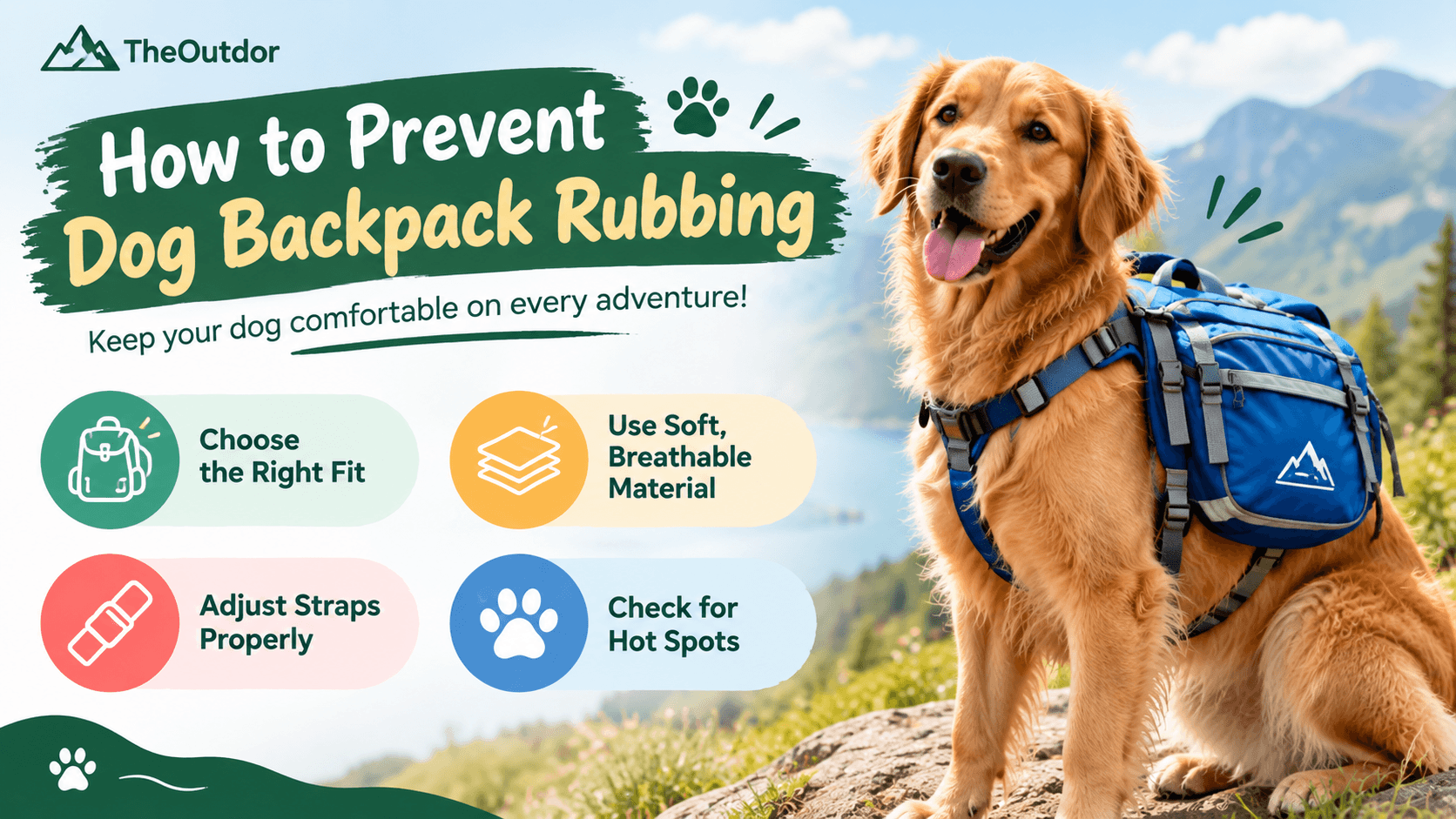
1. Choose the Right Size Dog Backpack
You need to measure your dog’s chest, back, neck, and body weight before choosing a dog backpack size since different manufacturers have varying size charts. You should ensure that the dog backpack is securely fastened for it to stay centered and allow free movement.
2. Adjust the Straps Correctly
Learn how to wear a dog backpack strap properly so that it doesn’t squeeze your dog. It is vital to focus on your dog’s chest, abdomen, and shoulder area in its natural position. A proper adjustment of the dog backpack will keep it from moving.
3. Check for Pressure Points
Check the common dog backpack pressure points before any walk that will be longer than usual, which include the areas behind the front legs, the chest area, shoulders, the stomach, and the lower neck area.
Check by placing your fingers along the edges of the straps of the dog backpack. It is necessary that the dog be comfortable moving about without feeling any pain or irritation because of the backpack.
4. Use a Padded Dog Backpack
Also, a backpack for a dog that is well-padded will help prevent any contact between the fabric and your pet’s body. It is essential to buy products that have round corners, breathable fabric, adjustable straps, and proper padding.
But remember that proper padding won’t make the right choice in picking the right size. So, make sure that you carefully consider fit and mobility.
5. Keep Your Dog’s Coat and Skin Dry
Wet fur might increase friction, resulting in irritation of the skin. Dry your pet’s fur in case of rain, swimming, or movement through wet vegetation.
Make sure you properly dry your backpack according to the instructions, and check all contact points, especially those under thick/damp fur.
6. Don’t Overload the Backpack
You should consider such things as your dog’s size, health condition, age, terrain, weather conditions, and fitness. There is no universal dog backpack weight limit. When wondering how much weight a dog can carry, always start light and then work up from there.
7. Introduce the Backpack Gradually
Dog Backpack Training Has to Begin at Home. Ensure that your dog becomes familiar with an empty backpack, and have him wear the backpack at home and begin walking your dog.
Increase the time for which the dog wears the backpack and the load and see the reaction of your dog such as improper body posture, irritation, shyness, irritability, and gait.
8. Check Your Dog After Every Walk
Monitor your dog for chafing due to wearing the dog backpack after each walk; some symptoms of chafing may be, among others, redness, loss of hair, irritation, itching, swelling, and/or sensitivity.
If your dog shows any of the above symptoms, remove the dog backpack immediately. We suggest you visit your veterinarian in case the condition worsens or does not get better
9. Give Your Dog Breaks During Long Walks
Long hikes need scheduled rests. Take off the pack during breaks and check your dog’s skin condition, movement, and general state of comfort. Regular stops will enable your dog to get some rest, water, and cool down.
Tips for dog hiking always imply resting, hydration, weather awareness, right terrain, and constant equipment checks. The backpack used must be comfortable and not be a source of constant discomfort.
Why Does a Dog Backpack Rub?
A backpack might irritate your dog because it doesn’t fit properly or because the straps move too much while walking. For your dog to enjoy using the backpack, it must fit well enough to allow your dog to move. Possible causes are:
Friction From Movement
During walking, there is always a certain movement between the dog’s body and the pack. So, if the pack moves side to side and slides up the neck, the same skin area is exposed to constant friction.
Poor Fit
A pack that is incorrectly chosen for your dog will press the areas that are supposed to stay free. Loose fitting can be the reason for excessive movement. Over-tight fitting will press on the body.
Moisture
Wetness of the coat can be the result of rain, grass, swimming, and sweating of your dog. Moisture increases friction between the material and the skin.
Excessive Weight
An excessive load will force your dog to alter their posture and movement style. The extra weight can cause the straps to put additional pressure on your dog’s skin.
Incorrect Strap Position
Straps that lie too close to the front legs can chafe the sensitive skin at the back of the legs. Straps for the chest and belly can also create pressure if positioned wrongly.

How Tight Should a Dog Backpack Be?
Your dog’s pack should fit tightly enough but not too tightly; it should stay in place while your dog walks, trots, and turns but should not restrict movement of the chest and shoulders. Test the quick fit:
- Two fingers can be slid beneath each strap.
- The pack does not move from side to side.
- The straps do not come in contact with the armpits.
- Your dog is able to breathe, sit down, lie down, and move its legs freely.
Therefore, should dog packs be tight? No, because tight packs put pressure on the skin. Loosely-fitting packs shift around and chafe. A good fit is when the pack is secure yet free to move.
Where Do Dog Backpacks Usually Rub?
The most common areas where chafing problems arise are always at the point where the straps come together and the skin folds. These are the problem areas as shown in the table below.
|
Body area |
Why it rubs |
What to check |
|
Armpits (behind front legs) |
Straps sit close, and the legs swing back and forth |
Loose or thin straps, redness, hair loss |
|
Chest |
Chest strap shifts or sits too high |
Strap near the throat, pressure marks |
|
Shoulders |
Straps pull when the pack is heavy or off-center |
Uneven wear, tender spots |
|
Belly |
Belly strap sits too far back or too tight |
Skin folds, irritation near the stomach |
| Neck | Pack rides up or the collar and strap overlap |
Rubbing under the collar, bald patches |
What to Do If Your Dog’s Backpack Is Already Rubbing
Discontinue use of the backpack in the event that any sign of irritation is noticed. Take the backpack off and examine the irritated area very carefully. When treating your dog’s backpack chafing problem, the first thing to do is eliminate the source of friction.
Avoid using the backpack if you notice irritation. This can be done by removing the backpack and looking at the affected area. To heal from chafing caused by the dog’s backpack, the first thing to do is to get rid of the reason for chafing: the dog’s backpack. Keep the area clean and dry.
Do not cover the irritation with any of your clothes or equipment in order to continue. In case it causes pain or does not go away, then make sure you tell the vet about it. Make sure that the backpack fits your dog.
How to Prevent Dog Backpack Rubbing on Long Hikes
More planning and preparation will be required for long hikes rather than short walks within the neighborhood. The dog hiking backpack must fit well and be comfortable regardless of the changing terrain.
You need to assess the following before hitting the road:
- Pack sizing
- Pack straps
- Pack loading
- Weather forecast
- Water availability
- Break areas
- Condition of your dog
- Pack contact areas on your dog
Ensure that the load is equally distributed. An unbalanced load will make the backpack move and put extra pressure on the side of your dog’s body.
A simple but effective technique to maintain dog hiking safety is to observe the actions of your dog. If your dog seems to be too tired and doesn’t want to walk anymore, you can slow down.
Dog Backpack Fitting Checklist
Use this quick dog backpack fitting guide before every walk:
|
Check |
What to Look For |
| Size | Measurements match the manufacturer’s sizing chart |
| Position | Pack sits evenly and remains centered |
| Straps | Secure without digging into the skin |
| Chest | Breathing and movement remain unrestricted |
| Front legs | Straps do not rub behind the legs |
| Weight | Load remains appropriate for the individual dog |
| Balance | Items stay evenly distributed |
| Skin | No redness, hair loss, or irritation |
| Coat | Fur and skin remain reasonably dry |
| Movement | Dog walks, sits, and turns normally |
A few minutes of investigation can help to prevent many discomforts that could have been prevented.
FAQs
Can a dog backpack cause chafing?
Yes, because the ill-suited backpack will irritate the skin and the hair of the dog, specifically around the chest, shoulders, abdomen, and back of the front legs.
This is due to moisture, exercise, the material of the clothes, and the weight of the load carried.
Can I put a shirt under a dog backpack?
Properly fitting T-shirts should help to eliminate any chance of friction, but should not create more friction, creases, heat, or pressure. The shirt under the dog backpack strategy works effectively only when the two clothes suit each other well.
Check the state of your skin after the process and take off the piece of clothing in case of moisture and friction.
How much weight can my dog carry in a backpack?
Most veterinarians recommend that the maximum weight of the backpack should not exceed 10-15% of the weight of your adult dog’s body; however, you have to begin with smaller weights. Your young, old or sick dog will not need any backpack at all.
Keep Your Dog Comfortable on Every Adventure
Some of the preventive actions from getting irritated by wearing the doggy backpack are the basic ones, such as correct fitting, straps’ adjustment, dry skin, correct loading, and gradual introducing of the equipment.
Inspections play no less of a role than proper fit. The chest, shoulders, abdomen, and places behind the forelegs of the dog have to be examined each time after the dog gets back home. In case of any irritation, using the backpack will be postponed until the cause is identified.
Also, some guidelines for the hikes that you must consider when going on a hike with your dog include the amount of water that the dog needs based on the weather and energy of your dog.
The backpack for the dog should be designed in such a way that wearing the backpack would give the dog pleasure and not pain. The right sizes, loading, training, and skin tests could be helpful.